

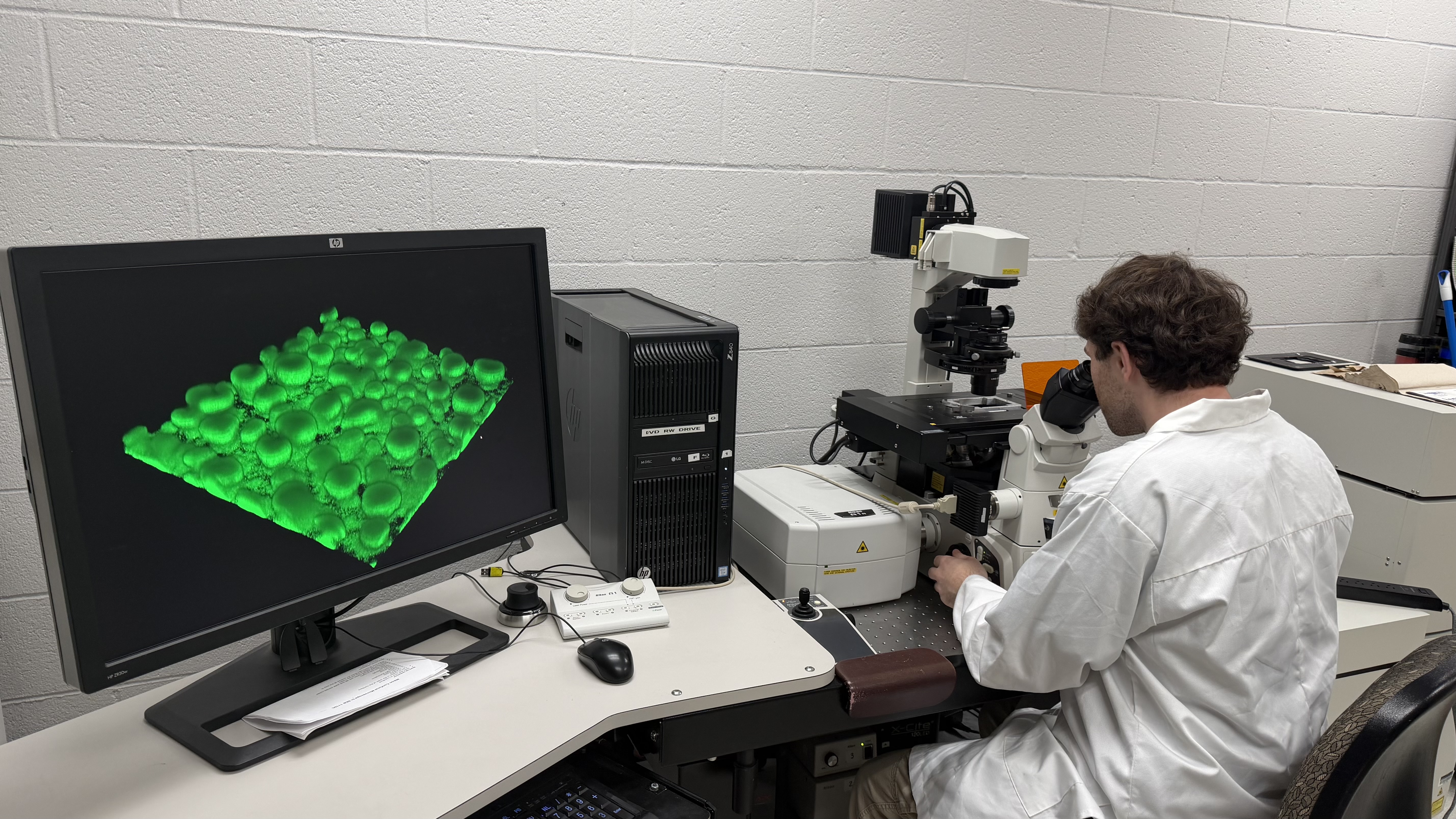
The Tseng Lab at UNLV is investigating how to isolate and degrade biofilms to cure drug-resistant infections and solve a $4 trillion infrastructure crisis.
Biofilms are aggregates of microbes surrounded by a matrix that forms around bacterial colonies, protecting them from stress and other external factors. This biological armor can cause biofilms to form on any surface, resulting in the corrosion of infrastructure and the shielding of drug-resistant infections from standard antibiotic treatments.
The lab itself has two problems it’s working on. The first is the biology of the biofilm itself: how it protects the bacteria and how the colony supports the biofilm. The second is the biofilm’s stress response to outside stimuli.
Professor Boo Shan Tseng wants to identify the roles bacteria play in biofilm-protected colonies, comparing them to a city and its workers.
“There’s some evidence that is the case,” Tseng said when asked about bacteria having individual roles. “But we don’t really understand who the people are and what they’re doing, right? So we’re currently trying to do that by looking at every single cell in that biofilm.”
Tseng hopes that by identifying the different roles each bacterium in the colony plays, her team can figure out whether one type of bacterium is in charge of maintaining the biofilm matrix. The team could then isolate and remove that bacterium, and the biofilm would degrade. This would make it easier to treat infections and remove bacterial colonies that affect infrastructure.
“So they’re important not only in this element of tolerance to antibiotics, but also our wastewater gets cleaned up using these microbial communities,” said Tseng.
Accidental Discovery
Tseng has researched biofilms and bacterial colonies since December 2010. Tseng got into biofilm stress research by accident.
“The envelope stress part was actually a side project because I was trying to do something,” said Tseng. “It was supposed to be a control for another experiment that was biophan-associated, and I couldn’t do it. And I was like, why can’t I do this? This isn’t making sense, right?”
Tseng’s original research focused on bacterial genes. She tried to remove a gene entirely, but couldn’t. That led her to ask why it couldn’t be removed, which led to the research her team is doing now.
Why is this important to know?
The second part of the Tseng lab is how biofilms protect the colonies and react to stress.
“They do a lot of bad things. A vast majority of the bad things they do actually are involved in corrosion of metal,” said Tseng. Tseng added that biofilms and these colonies can form on almost any surface, including hip replacements, ship hulls and pipes.
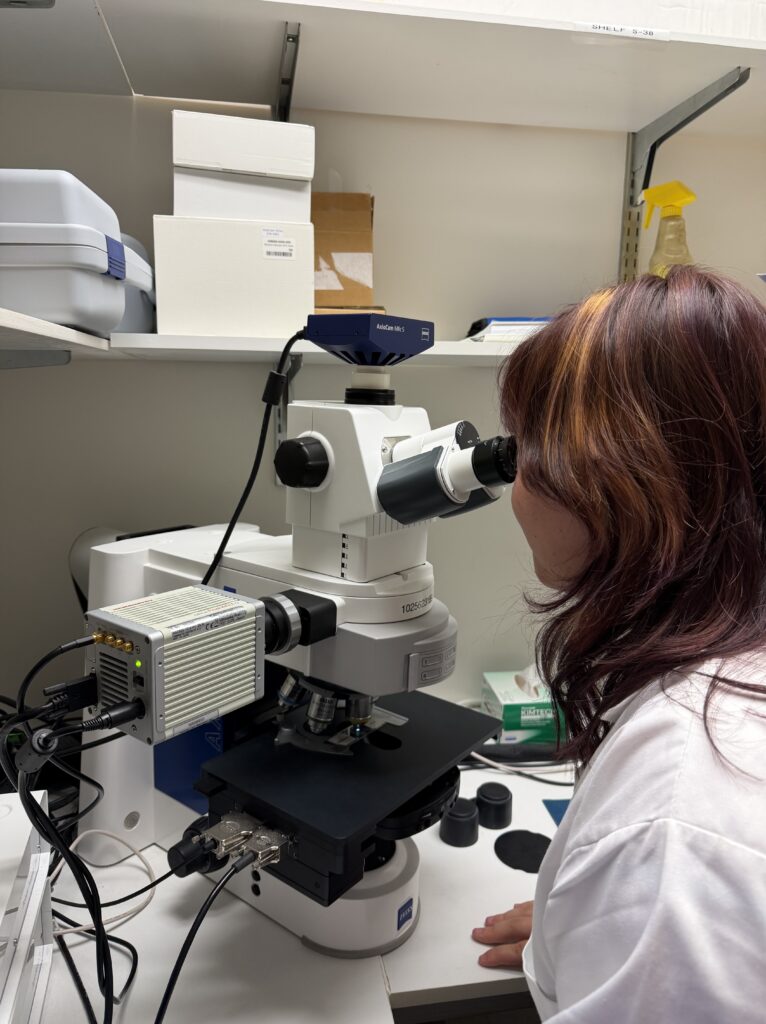
“Certain microbes can actually eat away at the metal, causing corrosion,” said Tseng.
According to Tseng, the biofilm colony can also grow extremely dense, clogging pipes and similar systems. This forces pipe maintainers, such as those who keep water mains and sewer systems running, to constantly clean and inspect them.
“It’s an infrastructure issue. So this is $4 trillion a year, globally, in damage,” said Tseng.
Biofilms also play a role in medicine.
“So, you know, a lot of older folks get hip replacements. If there’s any potential contamination when they go in, often they’ll form the biofilm on that metal,” said Tseng. Tseng explained that one can then treat it with antibiotics. Still, the biofilm increases these bacteria’s tolerance to antibiotics, and treatment then becomes a second surgery just to clean out the biofilm.
“So that’s a problem in the sense of, if the antibiotics can’t get through this layer, it’s just not going to be as effective as it normally would be compared to a bacterial infection that doesn’t have biofilm,” said Tseng.
The student problem
This problem isn’t limited to the bacteria Tseng’s lab is studying. According to a study by Simone Filardo on biofilms and chlamydia, “biofilm associated with Candida or Gardnerella genital infections may act as a chlamydial reservoir contributing to the transmission of C. trachomatis in the population.”
Essentially, the biofilm that protects the colony can shield STIs within it from treatment. Treatment for bacterial STIs can become harder when biofilms are involved.
“Some of these things, like drug-resistant gonorrhea, are very concerning because they can impact multiple parts of the body,” said professor Amanda Morgan, resident sexologist at UNLV. Morgan said that anywhere that people can receive pleasure, such as the anus and throat, is where these diseases can live, not just the genital area.
Biofilms and increased antibiotic resistance can cause chronic bacterial infections.
“The concern is that these infections are quite contagious. And now that they’re becoming drug-resistant, they’re significantly harder to cure,” said Morgan. “And for some folks, they assume that one round of antibiotics is enough or half of a round, and then they’ll give the other half to their partner, right, is enough. And that’s not right. That is how we create more drug-resistant bacteria.”
“It is important for people to take this seriously and to learn how to prevent it,” said Morgan, “As well as if something seems off, go get checked; it’s always better to know than to not know, better to be safe than sorry.”

