

UNLV’s community cats lose vital food, water and shelter support in summer, increasing their risk for severe health problems.
The Las Vegas Review-Journal estimates that 200,000 to 400,000 stray cats reside in the Las Vegas Valley. While cats can be seen throughout the state, some cats reside on UNLV’s campuses as their temporary homes.
The exact number of cats that frequent UNLV is unknown due to the cats’ roaming nature; however, an estimated 10-20 cats can be spotted on campus at any given time.
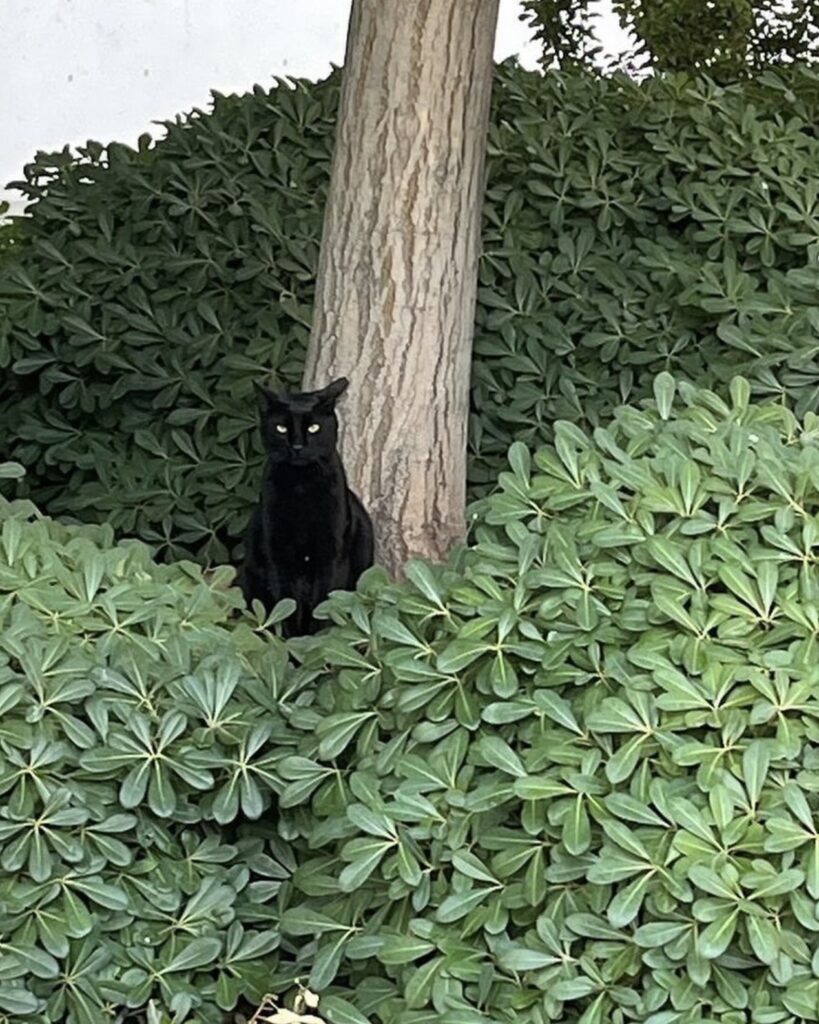
Cats are frequently seen between the Advanced Engineering Building (AEB) and the Artemus W. Ham Concert Hall (HCH); two black cats have become particularly well-known faces inside the HCH. Other locations include, but are not limited to, the Chemistry Building (CHE), William D. Carlson Education Building (CEB), the Honors College and the Performing Arts Center.
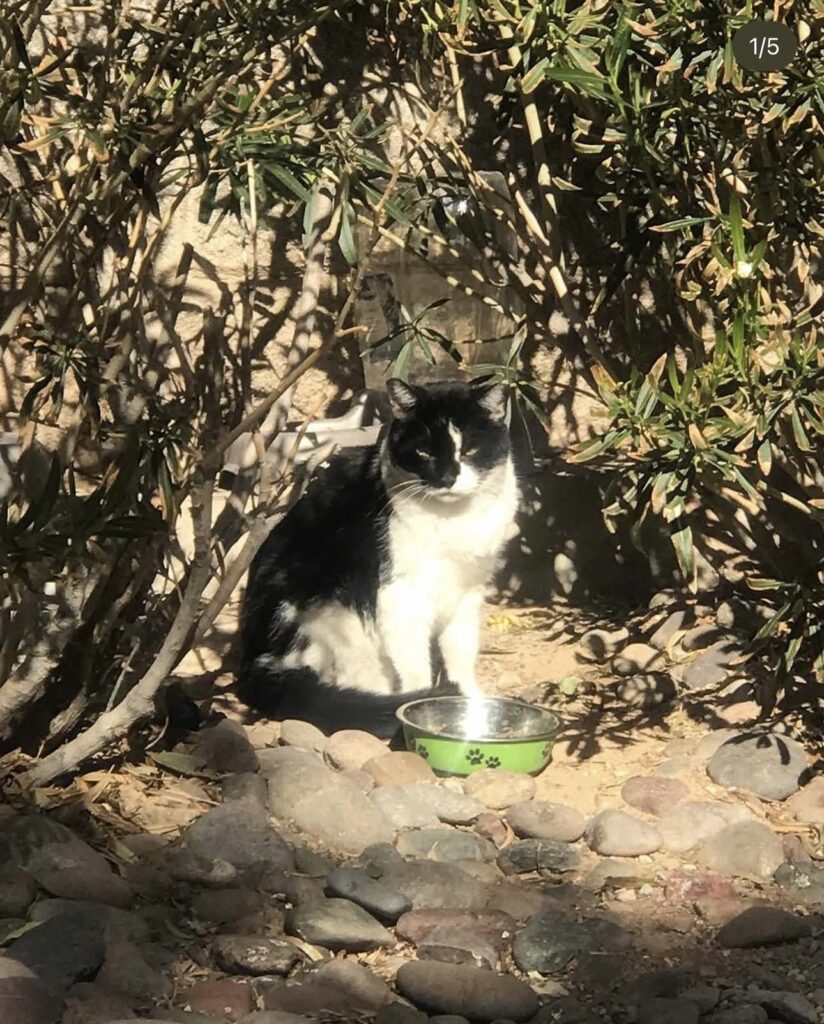
Stray cats tend to stay in resourceful areas where they rely on food, water and shelter opportunities. The generosity of students, staff and faculty makes UNLV welcoming for these cats.
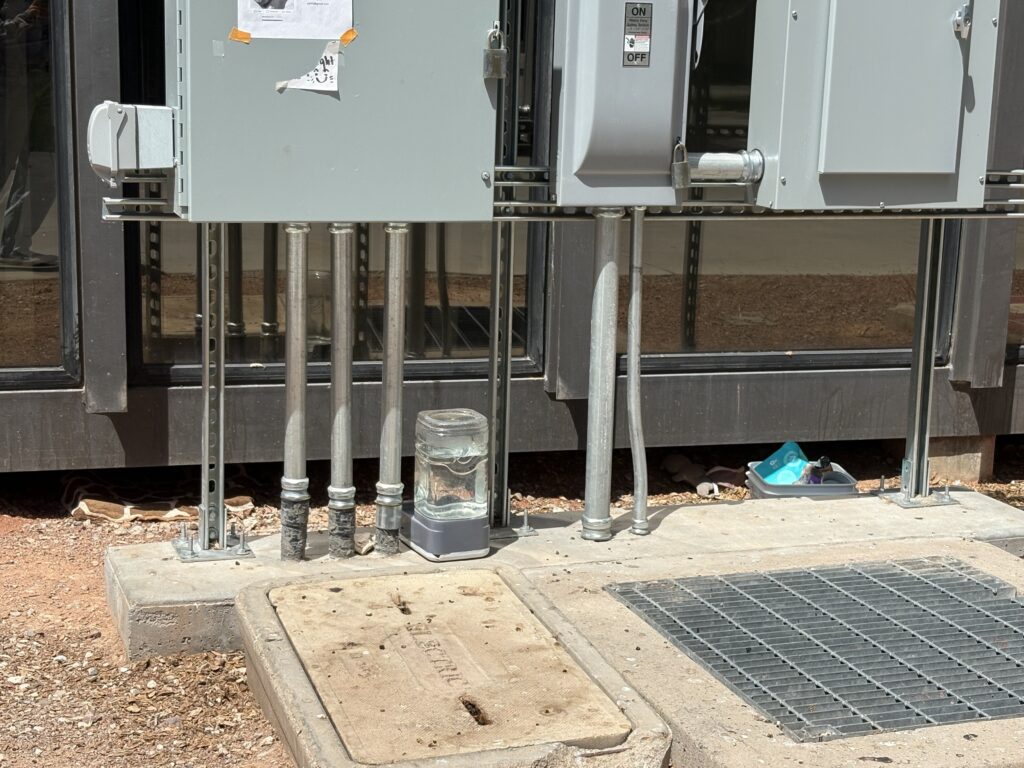
Between AEB and HCH resides a greenhouse where the cats have dedicated rest areas supported by staff and students. These areas contain bowls, cups and even a water dispenser to provide the cats with food and water. There are also scattered cat toys and mats.
The campus community’s involvement with the cats plays a large role in their ability to survive in the wild, which becomes more difficult in the summer.
During the summer, UNLV’s population decreases significantly. With fewer people on campus, the cats lose more resources, which is essential during the summer.
In hotter climates, cats are more susceptible to dehydration and heatstroke, which could lead to blood clotting, seizures and permanent kidney damage, according to PetMD. The heat of the pavement can also cause blistering and burning on cats’ paws.
According to Grist and Stray Cat Blues Inc., the increase in temperature also correlates with “kitten season.” Kitten season occurs during the warmer months of the year, since cats go into heat in warmer temperatures.
With strays constantly exposed to the outside heat, they’re left more vulnerable to breeding. This could result in more stray cats, especially if they haven’t been neutered.
Community cats are capable of adapting, but ultimately rely on human involvement for vital resources in hotter temperatures, such as water and shelter.
Many stray animals result from animal abandonment.
Animal abandonment in Las Vegas is high in Nevada, with the Clark County Animal Protection Service receiving about 1,061 calls for abandoned animals in 2024, according to KLAS-TV. The Animal Foundation also saw an 11% increase in 2025, taking in 29,000 pets, according to the Las Vegas Sun. UNLV Clinical Sciences Professor James Mah offers ways to help community cats both on and off campus.
Mah has addressed these concerns by caring for the stray cat population in Las Vegas for the past three years.
“It came to me,” said Mah, describing the process behind his work. It started with Mah feeding strays before he took it upon himself to prevent more cats from suffering. Mah then built a humane trap for a trap-neuter-return (TNR) process.
Mah checks if the cats have been spayed or neutered; if not, they are sent to animal shelters for support. Throughout these years, Mah has adopted six of these cats and rehomed around 30. Mah considers one of his “peak years” in this process to be when 18 cats were adopted by people from UNLV.
Regarding summer weather, Mah places a firm emphasis on providing clean water to community cats. “Although people leave water out on trays, because of the wind and dust, that water can become contaminated or blow away,” said Mah. “I emphasize the fresh water because in this hot environment, if the water is left out for a long period of time, green colors of algae start showing up.”
To combat this, Mah recommends that people add weight to plastic trays and containers used for water to prevent spills. Mah also suggests placing containers in shaded areas to avoid the water drying.
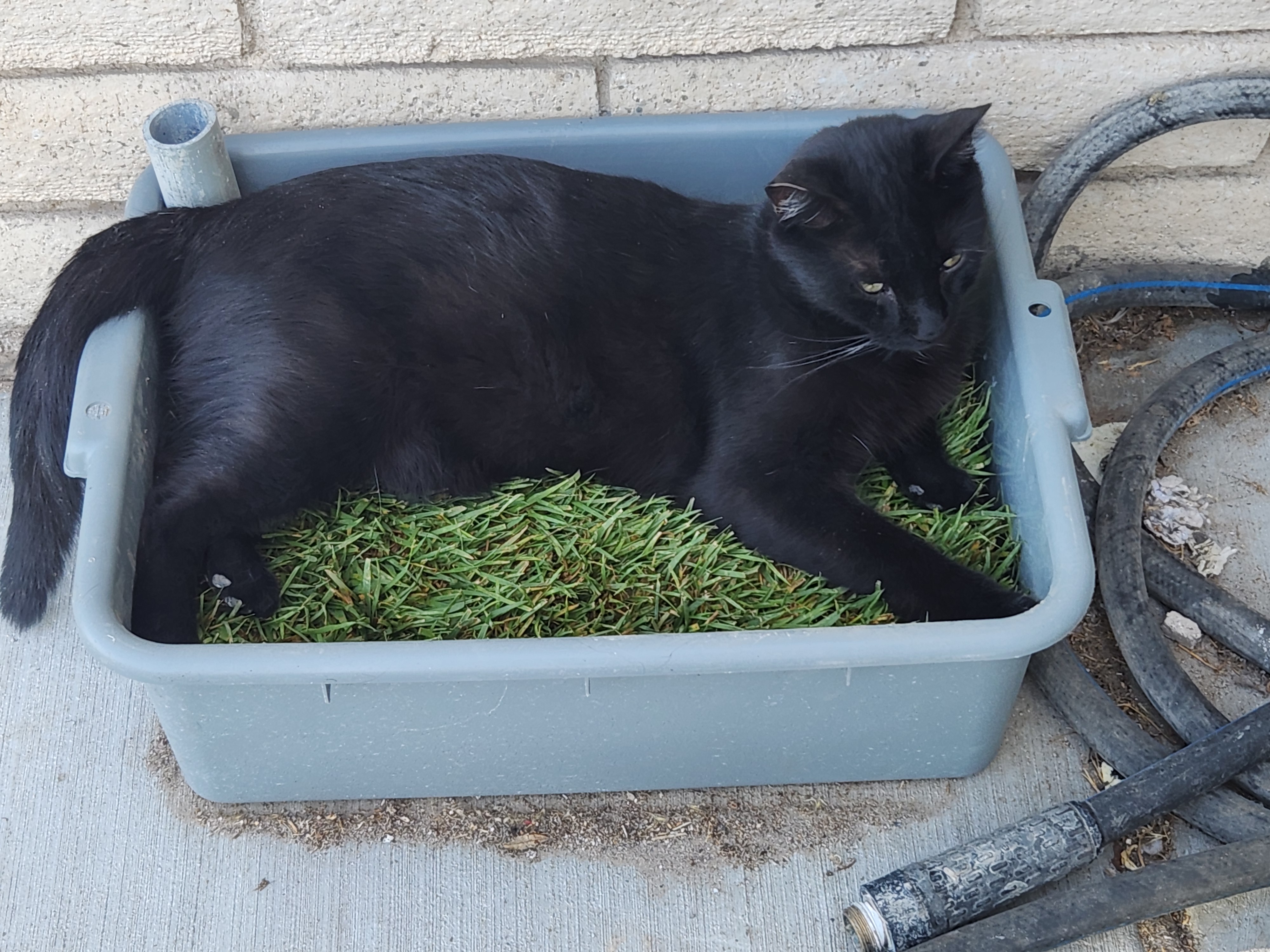
“People can put a small cardboard box in the shade, but I personally like cat cooling stations,” said Mah on making shelter for cats. Cat cooling stations can be created by layering a plastic tub with gravel, pebbles, peat moss and dirt. “I buy a (length of) sod and cut it into little squares into the tray, so there’s a watering tube.”
Out of all ways to assist stray cats, Mah says to volunteer and adopt from local animal shelters.
“I think one of the ways students can really get involved is by adopting cats and volunteering,” said Mah. “There are a number of agencies looking for volunteers across the board, like Heaven Can Wait Las Vegas and Henderson Cats, looking for people to trap the cats, so they can be fixed.”
For more information about volunteering, visit Heaven Can Wait and Henderson Cats volunteer pages.

