


Hundreds gathered on Jackson Avenue in Las Vegas’ Historic Westside to celebrate community-led revitalization efforts years in the making – marking a milestone in the neighborhood’s long-awaited resurgence.
For residents of Las Vegas’ Historic Westside, gathering together to dance on newly widened sidewalks under freshly shaded trees was more than just a block party – it was a tangible sign that Jackson Avenue, once the commercial and cultural backbone of the neighborhood, is stirring again.
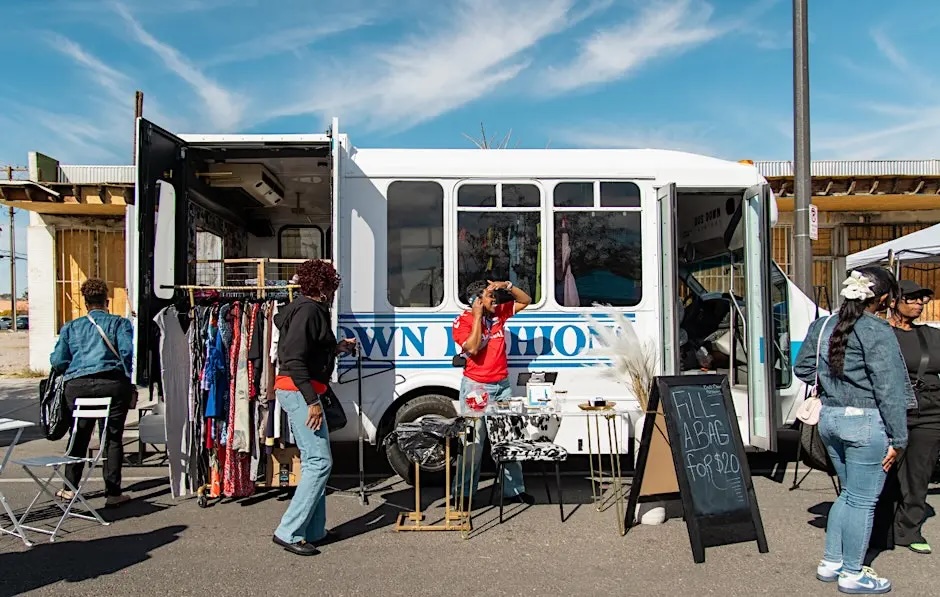
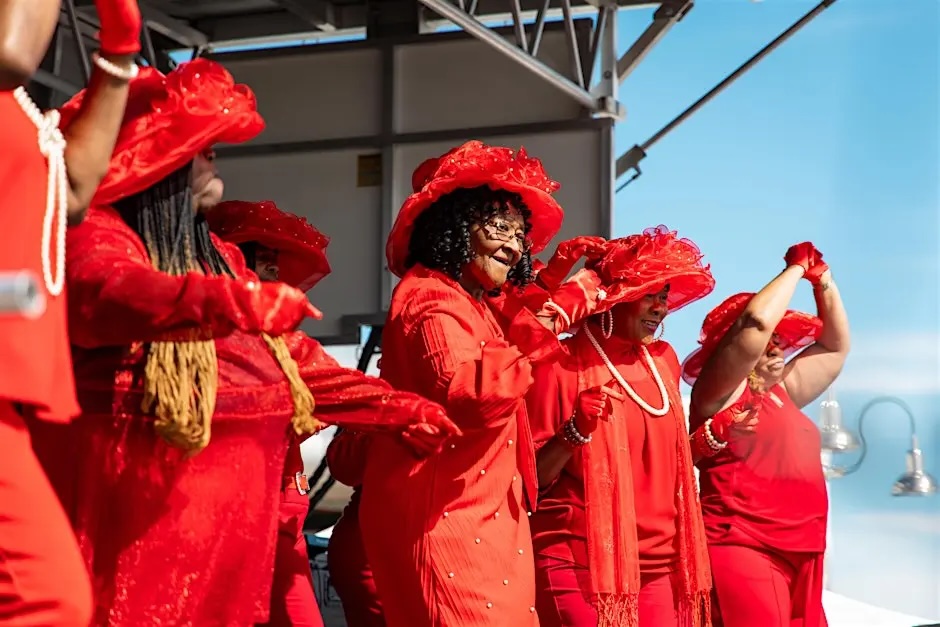
Hosted by the City of Las Vegas between D and F streets on Feb. 21, the free, family-friendly event featured live entertainment, a car and motorcycle show, local vendors, a farmers market and youth activities. Community organizations, including housing advocates and medical providers, handed out information and resources alongside jewelry makers and food trucks.
The celebration honored the ongoing implementation of the Historic Urban Neighborhood Design Redevelopment (HUNDRED) Plan. This community-led strategy was first developed in 2016 in partnership between the Historic Westside community and UNLV, according to an announcement from the City of Las Vegas.
Jackson Avenue once served as the “West Side Strip,” home to hotels, entertainment venues and gathering spaces during segregation, when Black residents were barred from much of the city’s economic life. In the late 1950s, construction of Interstate 15 created a physical barrier that cut off the Historic Westside from downtown, according to the City of Las Vegas’ Pathways to Removing Obstacles to Housing (Pro Housing) application. As desegregation allowed Black patrons to access businesses elsewhere – without parallel investment returning to the Westside – economic activity shifted, capital drained from the corridor and decades of systemic disinvestment followed.
“The extraordinary amount of disinvestment that has been seen in the Historic Westside has disconnected the community and left a vast amount of open space in the physical fabric.” asserted the Westside Development Group, a community-focused development organization dedicated to sustainable, long-term and respectful restoration of the Historic Westside in the HUNDRED Plan in Action.
Saturday’s block party was intentionally staged on the same corridor now redesigned through the Jackson Avenue Complete Street Project – an infrastructure overhaul that widened sidewalks to 15 feet, added 70 desert-adapted shade trees, reduced the road from four lanes to tow, installed shared-use bike lanes, a new irrigation system and upgraded dual-luminaire street lighting. The city completed the project on time and under budget, according to Wood Rodgers, the engineering firm involved in the redesign.
For residents who remember stalled efforts and unmet promises, the visible transformation carries emotional weight.
“I have an attitude of gratitude,” said Maxine Porter, a Las Vegas resident for over 50 years, as the rhinestones on her sunglasses glimmered. “We attempted to revitalize the area then, so even though we were not successful at the time, it’s good to see that the past is finally going to come to fruition.”
Porter was involved in the local efforts to revitalize Jackson Avenue in the 1980s, “That’s why I’m here today. Still cheering on Jackson Avenue.” she proudly declared.
“It’s a different spirit, a sense of camaraderie that I’m feeling here today. It’s beautiful to witness.” Porter said.
The celebration rests atop sobering statistics. The Historic Westside is a predominantly African American and Hispanic neighborhood with a median household income just under $25,000 per year, compared with about $57,000 citywide, according to the City of Las Vegas’ PRO Housing application.
Within the designated Neighborhood Revitalization Strategy Area (NRSA), the median household income was reported at $15,324 in 2020, with 98% of households earning below $50,000 annually. Median property values in the areas were $77,700, dramatically lower than citywide medians exceeding $200,000 at the time.
Meanwhile, the broader housing market has surged. Affordability has dipped because incomes have not kept pace with record price growth, according to the city’s PRO Housing application. In 2023, the average price of resale homes was $463,400 and the average new home sales price was $540,500 – following years of double-digit price growth. The document notes Clark County faces an estimated shortage of 85,000 units affordable to households earning below 60% of area median income.
The Historic Westside also has a higher share of renters than the city overall, and 63% of renters are cost-burdened – paying more than 30% of their income on housing.
These statistics underscore why Jackson Avenue’s renewal is not cosmetic, but structural.
Since 2020, the city has advanced the NRSA, shaped by more than a decade of community meetings, public workshops and stakeholder engagement tied to the HUNDRED Plan. The city reported nearly 200 residents and stakeholders contributed input during five community events, alongside churches, schools, developers and service providers.
“The HUNDRED Plan represents the desires of community members from the Historic Westside to see appropriate investment that represents the history and culture of the community while also recognizing the changing nature of the neighborhood and the city of Las Vegas,” according to the Westside Development Group’s HUNDRED Plan in Action.
Amid celebration, some residents voiced reluctance.
“This community has been overlooked for 60-something years, you know. And it’s still overlooked to a certain extent. But at least the people can look forward to some new improvements and developments in the community.” said Leonard Martin, West Side Community Associate President and Las Vegas West Side resident for 26 years.
Beautification and infrastructure upgrades can raise property values – and concerns. Martin explained, “All the people who have money come into your community and they depict what they want in your community.
“And a lot of these people in this community are 50 or 60, three or four generations. I feel as though they should have the opportunity to say what they want in their neighborhood and prosper from it,” stated Martin.
City leaders have emphasized that revitalization must not displace longtime residents. The HUNDRED Plan calls for anti-displacement policies, diversified housing options and rehabilitation of existing units. The city has also established a Community Land Trust and is providing down payment assistance through federal funds to reduce barriers to homeownership, according to the PRO Housing application.
Councilwoman Shondra Summers-Armstrong, whose Ward 5 includes the Historic Westside, addressed those concerns directly during Saturday’s event.
“What I want the community to understand is that this is not a pipe dream. This is not a hope or maybe. This is the work that is being done to get it done,” Summers-Armstrong told the audience.
The city has rejected projects that residents felt did not align with community priorities. In June 2025, the Las Vegas City Council voted 6-1 against the proposed “Harlem Nights” casino project after residents raised concerns about traffic and community impact.
The Jackson Street Alliance, a nonprofit composed of legacy landowners and community leaders, has positioned itself as “committed to bringing Jackson Avenue back to life” and is rooted in neighborhood history, according to the City of Las Vegas.
Saturday’s event also highlighted the next phase of development: economic impact reports, feasibility studies and community-led development group programs.
Melvin Valentine, manager of the grant awarded to the Jackson Street Alliance, said the city is investing in technology and workforce development to ensure residents help shape Jackson Avenue’s future.
“We’re going to package all that out and report back to city hall in May,” Valentine announced into the microphone, the audience cheered.
Planning efforts supported by federal funding are examining infrastructure needs, economic impact and design possibilities, according to the City of Las Vegas. The broader revitalization strategy includes infill housing on vacant lots, restoration of historic properties, small business incubation, gateway signage, improved parks and entertainment corridors tied to the area’s cultural legacy.
The Nevada Preservation Foundation has received funding to support restoration planning for historic properties, and the city is working with local lending institutions to provide entrepreneurial training and access to capital for residents, according to The HUNDRED Plan in Action.
As the music continued Saturday afternoon, it was the street itself that told the story – families lingering on widened sidewalks with vendors selling handmade goods where storefronts once sat vacant.
“Growth is a good thing. Stagnant is never good, there always has to be growth.” said Porter, “The question is how much are you going to do to ensure the growth is positive and channels in a good direction.”
The Historic Westside’s story is inseparable from the story of Las Vegas – from segregation to resilience to reinvention. Jackson Avenue’s renewal does not erase decades of disinvestment, nor does it resolve the region’s affordable housing crisis overnight.
However, on Feb. 21 – the corridor once known as the “West Side Strip” stood as evidence of visible reinvestment, with residents, small businesses and civic leaders reclaiming space that had long been defined by vacancy.
As Summers-Armstrong told the crowd, the work is no longer theoretical.
On Jackson Avenue, it is visible.

