

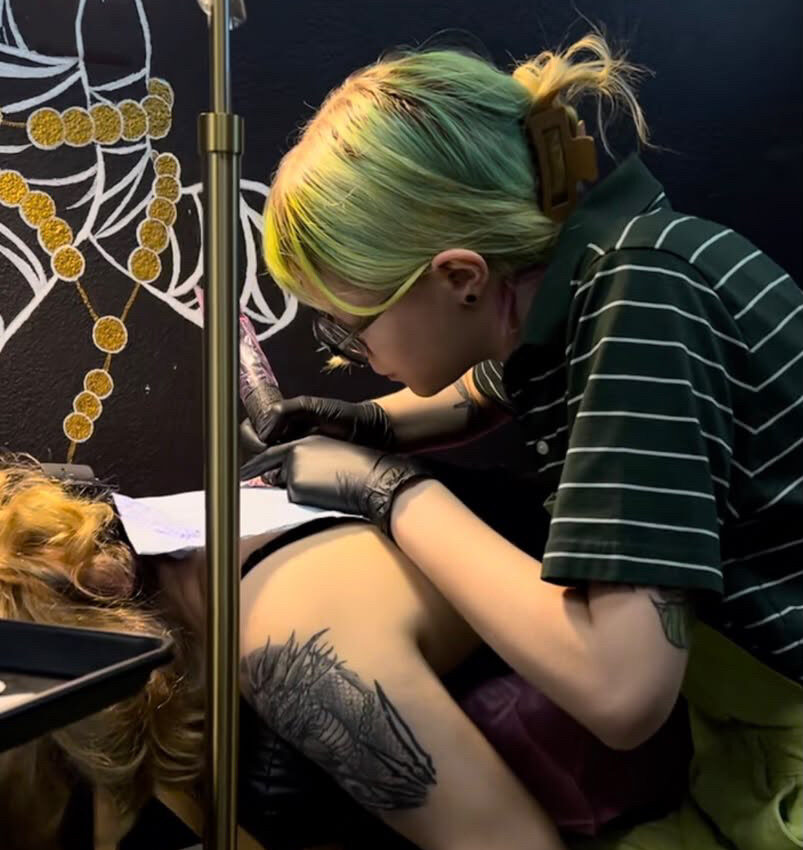
Tattoos leave a mark on more than just skin — the industry surrounding ink is growing faster than some artists in the scene are ready for.
Tattoo culture across the United States has grown rapidly in the past 15 years. According to The Harris Poll in 2012, one in five Americans has a tattoo. Pew Research reports that in 2026, that percentage has grown to about one in three Americans.
This growth in popularity has led to an explosion of tattoo parlors and suppliers around the world, with many American tattooers questioning the quality standards of these international vendors.
Tracing history
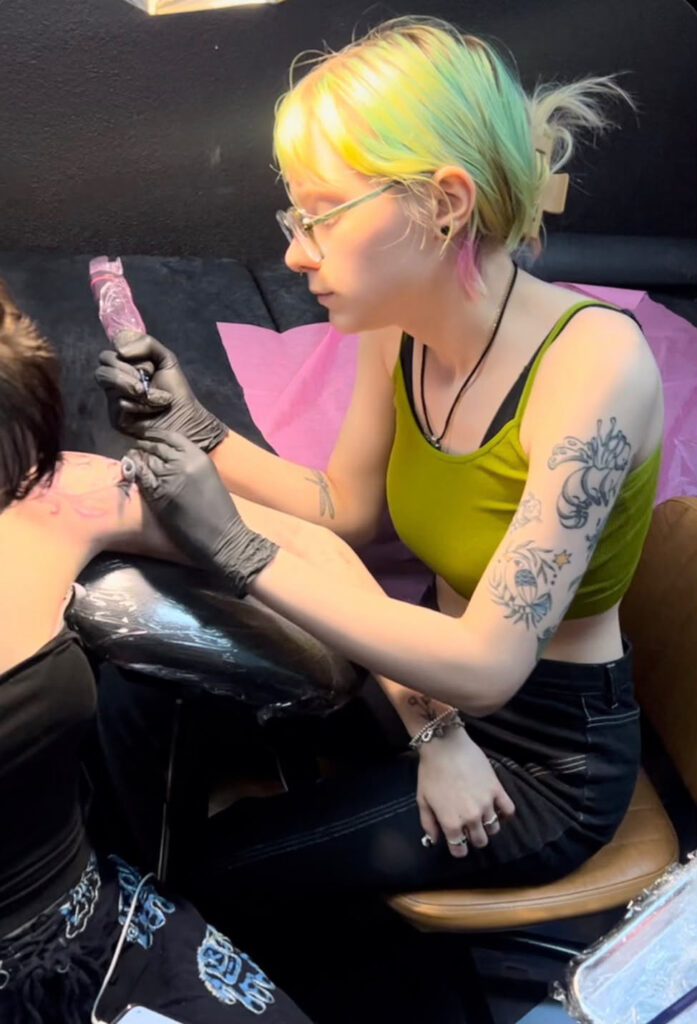
Tattooing has long been a community affair. In the American Southwest, tattooing’s history goes back 2,000 years. In southeastern Utah, archeologists found ancient tattoo instruments made using prickly pear cactus needles and yucca leaves.
Indigenous Americans across the continent have practiced tattooing for thousands of years, often developing styles completely independent of other cultures in the Americas.
Many cultures across the world have distinct tattooing practices, from sub-Saharan Africa to Polynesia. The word “tattoo” itself comes from the Polynesian word “tatau,” popularized in English when James Cook encountered tattooed men in Tahiti on his first expedition in 1768.
“People have always loved the idea of getting to permanently mark their bodies with something that represents something to them, you know?” said Jay Flannigan, a tattoo artist at Critical Hit Tattoo in Las Vegas.
In the 1900s, tattooing in the United States took off with the advent of the American traditional style, spearheaded by a Navy artist named “Sailor Jerry.”
American traditional tattoos took inspiration from the craft of Japanese tattoos, blending coloring and linework techniques to create bold styles that people today still get memorialized on their skin.
Despite the American traditional style gaining popularity, for decades tattoos have been nothing more than an alternative culture. Now, artists say tattoos have gone mainstream — and with that status come threats.
Flash forward
Since the 2010s, Las Vegas has become a national hub for tattooing.
“You know, 15 years ago I could tell you what shops were around, and it was, you know, not a whole ton of shops,” said Tyson Taumaoe, owner of 18b Tattoo in the Las Vegas Arts District.
“Now I couldn’t even name any of the artists down the street.”
According to Removery, a national tattoo removal service, Las Vegas has the second-highest number of tattoo shops per capita in the United States — right behind Miami Beach, Florida.
The popularity of tattooing in Las Vegas has led to several discount tattoo stores opening, drawing skepticism from the larger tattoo community.
Tattoo parlors interested in saving money are financially incentivized to purchase low-grade materials, which can threaten the safety of their consumers and the quality of their tattoos.
In 2024, according to an FDA study, 35% of tested tattoo ink kits purchased from suppliers contained trace amounts of anaerobic bacteria that posed health risks to consumers.
“Some companies out of Canada like to regulate their products, but in general it’s kind of all over the place as far as quality goes,” said Taumaoe.
Reputation goes a long way in the Vegas tattoo industry. While certain shops are notorious for their quality of work, artists in the valley are not likely to make public comments regarding them, fearing for their careers.
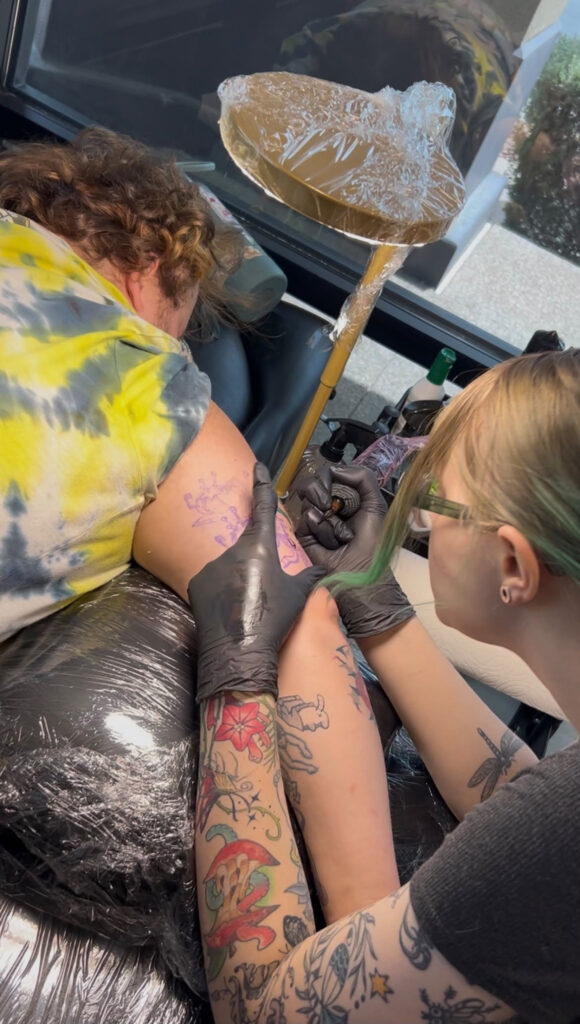
“We’re closed-off in a lot of ways, and there’s a history behind that, of course, but unfortunately that also leads to a lot of abuse and mistreatment in the industry not being known,” said Flannigan.
In the past year, artists across the world have raised concerns on social media about the business structure of multinational corporate tattoo chains like the Australian-based Celebrity Ink.
Allegations detail the lock-outs of several franchisees from their stores, with franchisor staff taking over due to “minor violations” in corporate policy. Franchisees argue that they are unfairly represented and unfairly paid for the work they perform.
In 2024, Michael Smairl, a franchisee of Celebrity Ink in New South Wales, Australia, filed a collective bargaining class exemption notice form with the Australian Competition and Consumer Commission on behalf of Australian franchisees. The collective bargaining form was filed in order to argue for greater royalties and fewer franchise fees from their corporate owner.
Cleopatra Ink, a multinational tattoo chain based in Alanya, Turkey, has been at the center of American artists’ discussions surrounding alleged labor trafficking.
Cleopatra Ink regularly opens franchise locations across the U.S., with hiring often conducted in Eastern Europe by Cleopatra’s Ink Inc., its parent company.
Allegations detail that Cleopatra Ink artists are underpaid for their positions and lack possession of their own work visas. The Department of Labor lists “knowingly holding, destroying, or confiscating workers’ passports, visas, or other immigration documents” as illegal.
According to Indeed.com, Cleopatra Ink artists are paid $10,000 less than the national average for tattoo artists.
“If you have experienced someone “holding” your passport or visa, or another situation that concerns you, you can report it,” writes Chrissy Tasker, a tattoo health and safety specialist, in a Facebook post. “I didn’t bring this to the artists. Artists brought it to me. They have shared experiences and business models that have raised some very important questions about labor trafficking within the industry.”
Tasker ends her Facebook post urging artists concerned about labor trafficking to use the code word “CLEOPATRA” on Simply Report, a human trafficking reporting website.
Rumors regarding the legality of Cleopatra Ink’s hiring practices are strictly alleged, however its corporate business model nonetheless comes as a shock to established tattoo artists across the country.

