

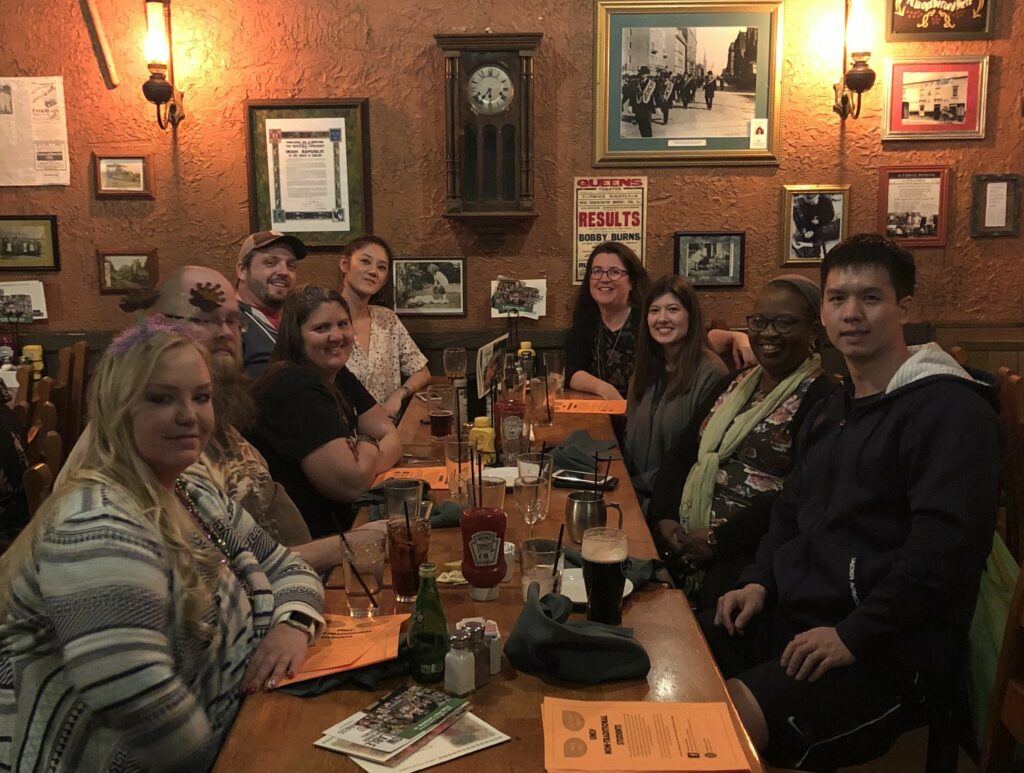
It’s a Friday night in Las Vegas, and the city is packed with people looking into a collection of bright lights above. Inside a restaurant on Fremont Street, Beverly Carter – also known as Ms. Bev – admires an array of bright lights herself.
One of these bright lights is formerly incarcerated, another is married with kids. The one across from her is a close friend. His name is Tom Fairchild.
They each have their own lives and struggles, but Ms. Bev sees the light in each one of them.
Despite their differences, there’s one thing they all have in common. They’re college students. Not just average students – they’re nontraditional. They’re part of The Alliance of Non-Traditional Students, a group that accepts them regardless of where they stand in their education journey.
For Ms. Bev, diversity was never only a buzzword. As someone who was born and raised in the cultural melting pot of New York City, diversity was a way of life. She grew up in Washington Heights surrounded by a community that looked like her. However, Ms. Bev wasn’t surprised if she was the only Black girl amongst a classroom of Jewish kids.
By the 1970s, her neighborhood became the largest population of Dominicans outside of the Dominican Republic. Despite this, her two best friends were Japanese and Puerto Rican.
As a kid, being different was nothing new for her. When she wanted to play the drums, she was told, “girls don’t do that.” By fourth grade, she was above her grade’s reading level. To some kids, being smart was a gift – to Ms. Bev, it meant being bullied.
She attended The Bronx High School of Science, a prestigious institution notorious for graduating the most Nobel Peace Prize winners in the world, but Ms. Bev would tell others, “Oh, I just go to school in the Bronx.”
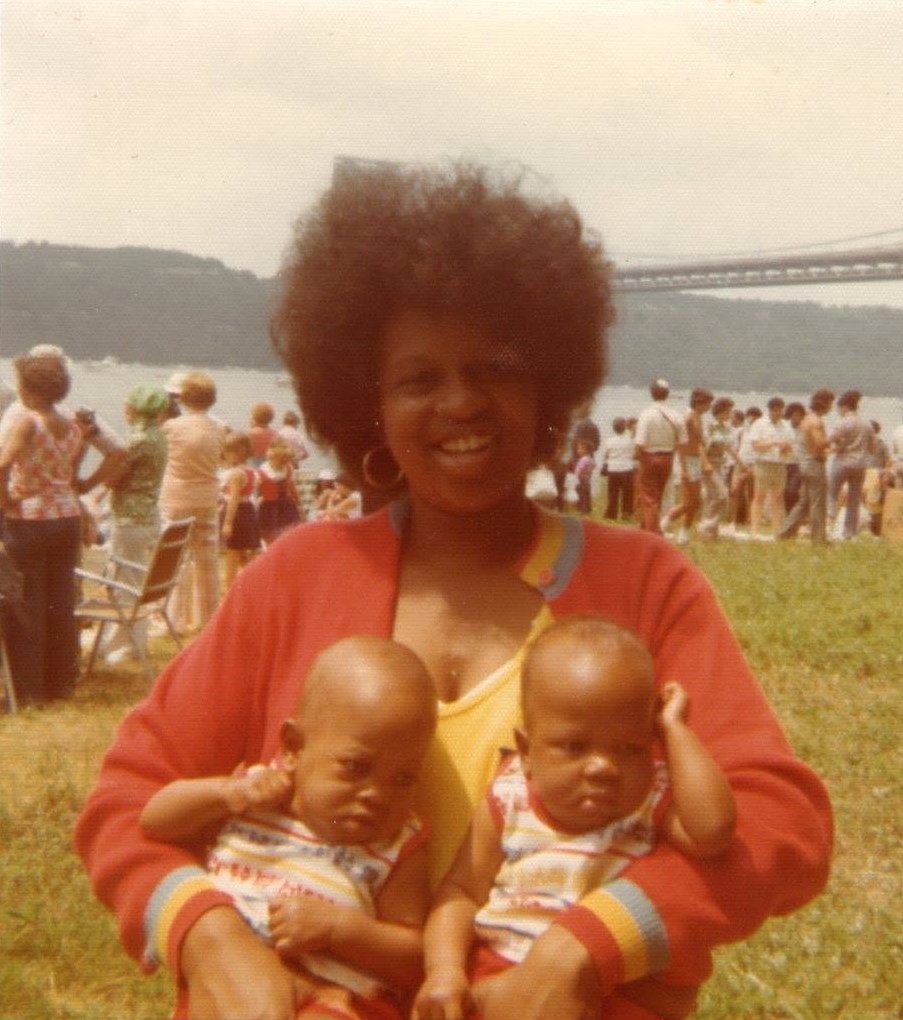
Ms. Bev expected to go to an Ivy League university but gave birth to twins just two days after turning 18 years old. Seven years later, she took in her niece as one of her own. She was a single mother working full-time as a tax professional. It wasn’t the plan she had in mind, but she never let go of her passion for learning.
In the midst of life’s responsibilities, pursuing a higher education felt like a dream that was fading. It took Ms. Bev 11 years to complete a two-year degree. She was disappointed. She felt like a failure. It wasn’t until she moved to Las Vegas that she realized the amount of time she took was not a sign of failure, but a sign of persistence.
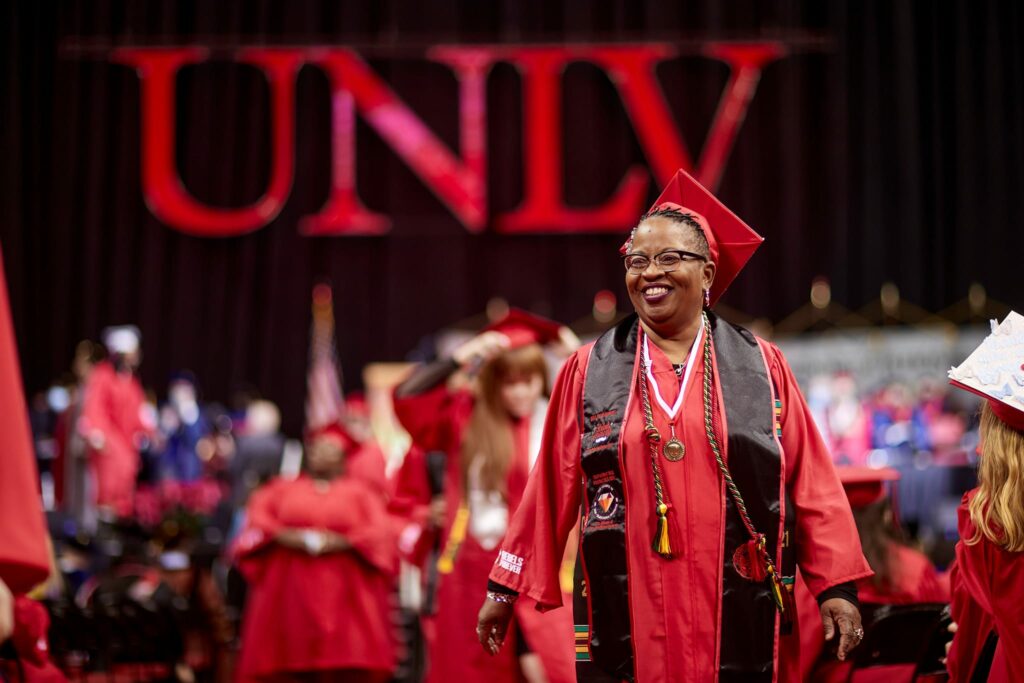
She started her journey as a student at UNLV in 2017, pursuing her first bachelor’s degree at 60 years old. The path was new and would be far from easily paved. When she failed a math class three times, she switched her major from business to interdisciplinary studies.
As if school wasn’t hard enough, she often dealt with the feeling of being different. She walked into class and was asked, “You’re not a student, are you?” She was stunned that a simple question could feel so discriminatory.
She told a teacher she wanted to be addressed as “Ms. Carter” instead of “Beverly.” The teacher scoffed, instead using “she” or “her” for the rest of the semester. The level of microaggressions was shocking, but it was her reality. She felt silenced.
In search of community, she got in touch with a fellow incoming student, Tom Fairchild. The two started a Facebook group that older students could join. They would meet frequently off campus, their first time at the long-forgotten restaurant on Fremont Street. They wanted something simple: a space where “grown folks” could talk. It was here she no longer had to advocate for her own name.
From that point on, when she’d introduce herself, it wasn’t “Ms. Carter” or “Beverly.” She’d simply say, “It’s Ms. Bev.”
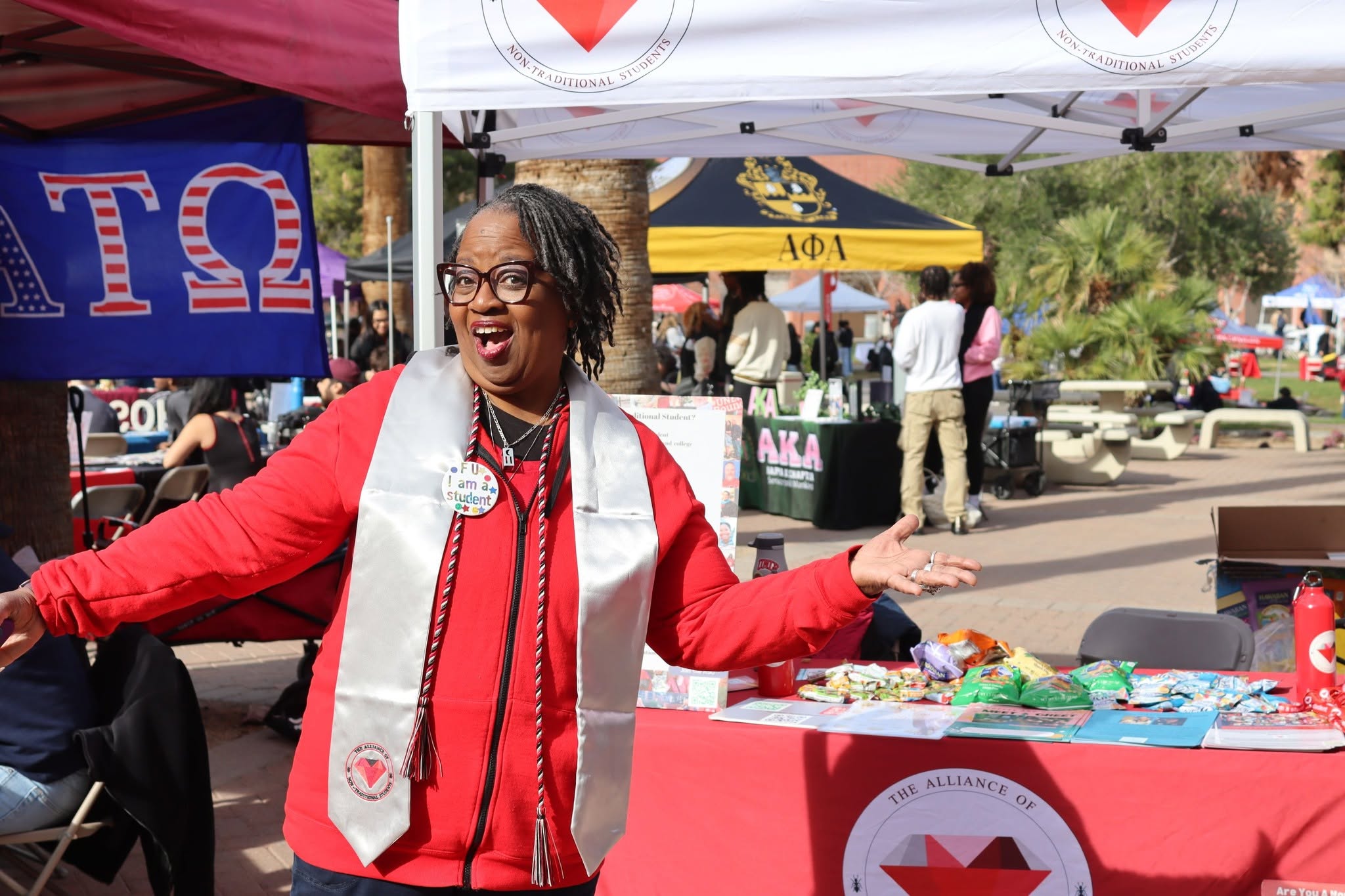
Through her research, she discovered what she was looking for at UNLV: an organization called the Alliance of Non-Traditional Students (ANTS). It had been dormant for three years.
She brought it back to life.
It wasn’t hard to establish a new board of members, with Fairchild and Ms. Bev naming themselves president and vice president. Through in-person meetings, involvement fairs and word of mouth – the organization grew. It began to open its doors to anyone needing a safe space, not just students in nontraditional age groups.
One day, a student messaged the Facebook group saying, “I’m having problems. I can’t finish. I’m going to quit.”
Ms. Bev rushed to The Intersection, UNLV’s multicultural resource center, and went to the first person she saw. She explained the student was facing homelessness, made connections and directed him to the people he needed. Thanks to Ms. Bev’s assistance, the student was able to find the resources he needed and was able to acquire a free semester of housing and a free meal plan.
At this moment, Ms. Bev knew ANTS was a group that wouldn’t only meet at restaurants anymore, it was a support system. It was a community of individuals that knew how to come together and uplift each other. Ms. Bev realized she was never silenced in the first place. She always had a voice, one she could give to others.
At the UNLV Rebel Awards in 2021, Ms. Bev was nominated by the group and won a Hall of Fame award. That same year, ANTS was also the second-largest organization on campus. The Facebook group that started with four members now has more than 400.
The organization welcomes students who are formerly incarcerated, disabled, parents, veterans, neurodivergent and much more. If a student needs a space, ANTS will make space.
“The group’s mission is three-fold: provide information, create fellowship and advocate,” said Fairchild, former president of ANTS. However, the work doesn’t stop there.
“ANTS is unfunded,” said Ms. Bev. “ANTS is giving a feeling of support to a population that is still not being properly serviced by UNLV. If there’s any student group that needs to turn into a department, it’s the nontraditional students.”
She emphasizes that the importance of equity and inclusion extends to characteristics that are not as visible.
“You can’t tell if someone’s a former sex worker. You can’t tell if someone’s parents have been deported. You can’t tell that when someone goes home, they have to take care of their ailing mother,” she said.
Today, Ms. Bev is 68 years old. She’s wrapping up her final semester as a master’s student in higher education and plans on pursuing her Ph.D. next.
She considers ANTS to be her baby, but notes the best thing she can do to help the group grow is step down from her leadership role.
“I didn’t start this alone, but I nurtured the baby. I fed the baby. I taught the baby how to walk. And now, the baby needs to run,” she said.

