

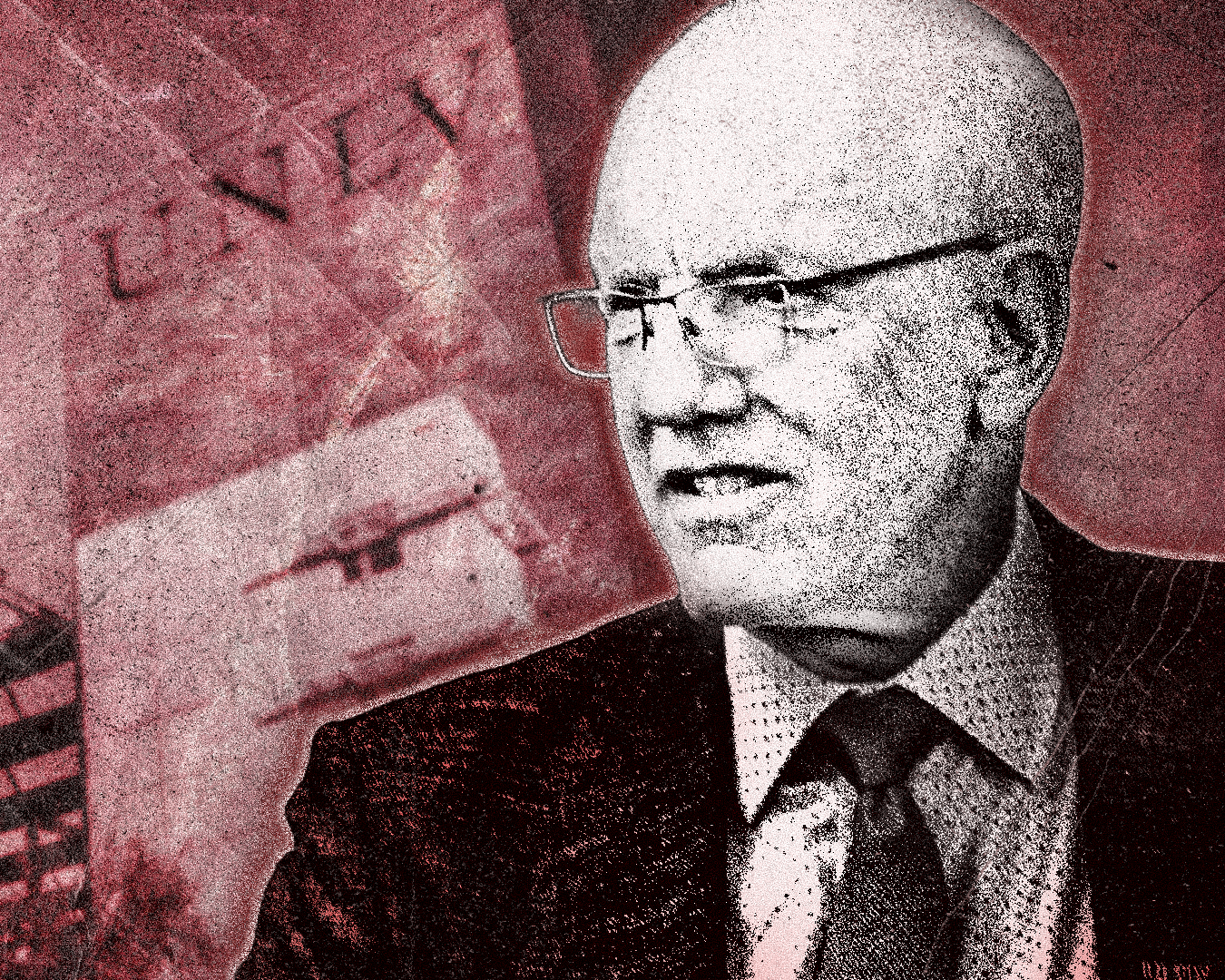
The UNLV Faculty Senate has approved a recommendation to the NSHE Board of Regents to remove “interim” from Chris Heavey’s presidential title, following a 44-7 vote with one abstention on Sept. 8.
Following the Senate’s decision, the Board of Regents will vote to decide whether Heavey will become UNLV’s official president moving forward. Before becoming interim president in April 2025, he served as UNLV’s executive vice president until former President Keith Whitfield’s sudden resignation last year.
Heavey could not immediately assume Whitfield’s role as president due to Title II of the Nevada System of Higher Education (NSHE),which requires an interim university president to serve one year before transitioning to president.
While Heavey mentioned his past university positions, including executive vice president, senior vice provost and dean, he emphasized the importance of his interim position. Heavey has been the interim president for about 16 months and recognized this past year as a “great learning experience,” saying he has “learned a lot” about how to lead the institution.
“If I end up in this role, I’ll make every decision based on what I think is best for the mission. I come with no other interests,” Heavey said.
The last UNLV president that served for over five years was Carol Harter, serving from 1995 to 2006. When asked about this 20-year streak, Heavy acknowledged the importance of long-term commitment in a president.
“I definitely recognize that the frequent turnover in the UNLV presidency has not been a strength. It’s a detriment to stability and culture institution,” Heavey said. “I’d like to serve in the role for as long as I can. I said earlier that I’d like to serve for 10 years. I don’t know if I can beat Carol Harter’s record, but I’d like to have a long run.”
During Heavey’s remarks, Maria Roberts, past chair of the Faculty Senate, asked Heavey what
would bring more contributions and people to the provost to provide university donations or funding.
Decisions made by Heavey to address funding and gift concerns included the hiring of a new chief financial officer and vice president for philanthropy and alumni engagement. According to the president’s cabinet members’ website, both roles involve the cabinet in UNLV’s financial management.
Compared to last year, Heavey’s administration has shaped the budget differently. According to Heavey the year before he took over, UNLV raised $62 million in philanthropy, but last year, UNLV raised $75 million.
In 2025, fundraising averaged $53 million under Whitfield, while fundraising was projected at $73 million under Heavey, according to UNLV’s 2025 Annual Report.
Heavey acknowledged these improvements but hopes to get UNLV “in the direction of $150 million plus.”
He also described UNLV as a “thriving university in turbulent times,” citing challenges to the future of education, such as developments in artificial intelligence and the Trump administration’s efforts to modify education.
Heavy said that the federal government has “a very strong agenda to reform higher education,” which has impacted UNLV.
Under Heavey’s administration, UNLV has addressed the topic of artificial intelligence (AI) through the purchase of enterprise-level access to the Anthropic generative AI model, Claude, in order to support “equity of access,” according to Heavey, which would alleviate the need for personal AI subscriptions by creating a free, university-wide AI subscription.
In a statement to the Scarlet and Gray Free Press, CSUN affirmed support for Heavey following the decision.
“CSUN, as the official representatives of the more than 27,000 undergraduate students who attend UNLV, affirms our support for the appointment of Dr. Heavey as Permanent President, and urges the Board to appoint Dr. Heavey as Permanent President rather than launching a national search for aforementioned reasons,” according to the statement.
Kelechi Odunze, CSUN student body president, who was present during the vote, said it was a “really good debate.”
“There was a lot of positives as to why president Heavey should be president. He’s spent so much time – over 30 years at UNLV,” Odunze said. “He’s pretty much served in every academic position that you can.”
Michael Kagan, chair of the Faculty Senate and director of the UNLV Immigration Clinic, said, “I’m glad that the Faculty Senate voted overwhelmingly to support him [Heavey]. I hope the Board of Regents agrees.”
Kagan estimates that the Board of Regents will meet on Oct. 16 to discuss modifying Heavey’s position title, although the date has not been confirmed.
“He’s been a lifetime leader at UNLV,” said Kagan. “What I would say to him privately, and what I would say publicly is ‘Please continue to do the best to lead UNLV. We have a great deal of potential on this campus, and we’ve only realized some of it. Keep the momentum going.’”

