

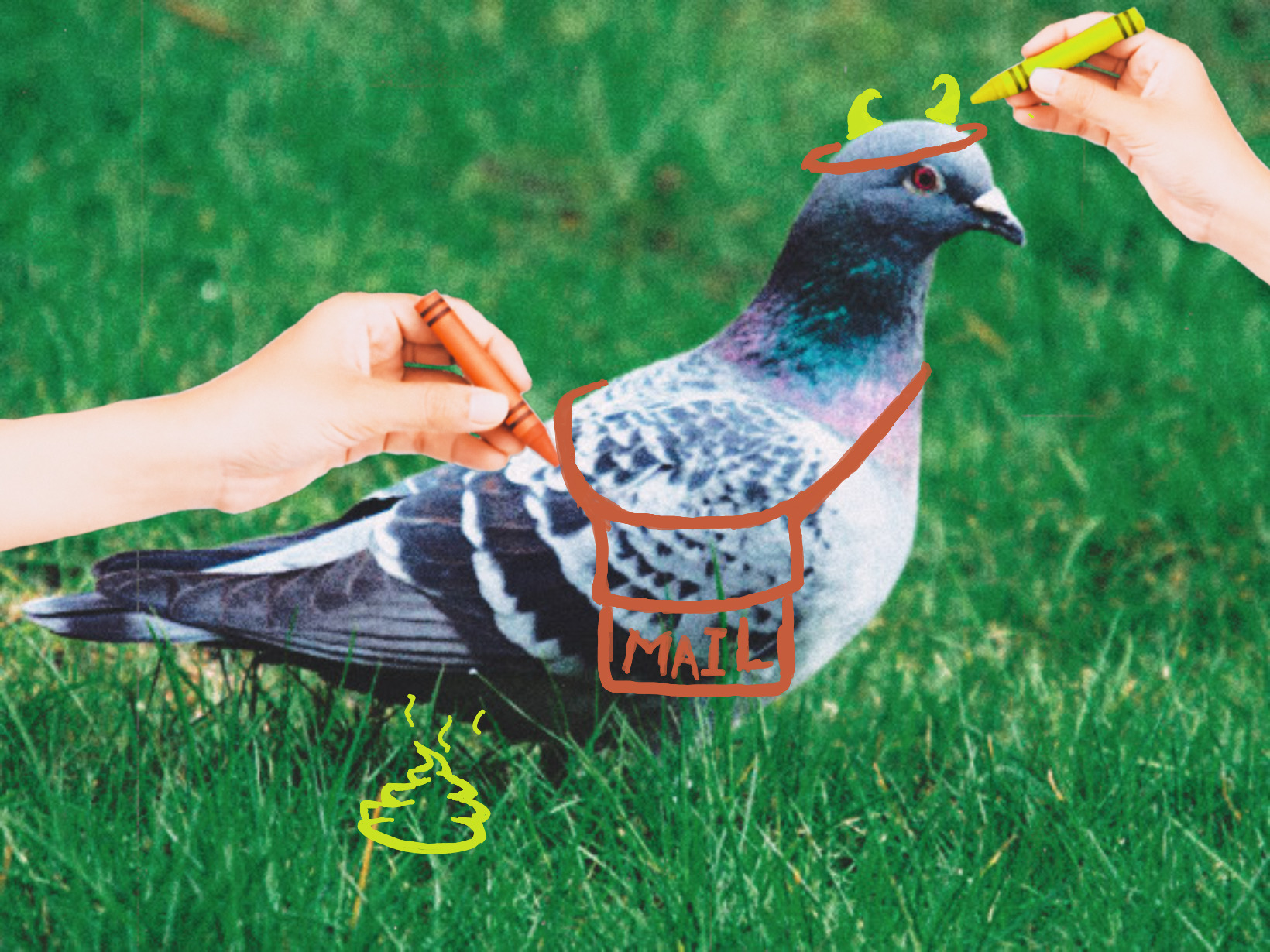
Domesticated for service and abandoned by humans for technology, the common rock pigeons we see today have yet to get the memo we are done with them. The hidden population of people who adore, understand and love pigeons are largely silenced by the majority of metropolitan populations who are sickened merely by their sight.
Just look at any of those filthy, disease-ridden, trash-eating menaces that take up patches of crowded metropolitan areas. They poop everywhere and bother people. This sentiment is not necessarily wrong or uncommon, but you could say a lot of the same things about seagulls, pelicans and geese.
Any local UNLV pigeon shuts those stereotypes down. They raise their babies and make their nests undisturbed, tucked away in the crevices of campus. College students, especially those here, do not have the time, energy or malice to chase or hurt the pigeons.
“These campus pigeons have a death wish, but are by far one of the most calm pigeons on earth,” said student Jay Hicks.
There’s a mutualistic relationship we have with the pigeons here, one where they benefit from our chillness and we remain unaffected. We keep eating our food outside and let the crumbs hit the ground, the agriculture and ecology is well-maintained, we have water sources and as long as they avoid parking lots, they don’t have to worry about the usual city traffic.
Something about pigeons and their forgotten history has left a permanent soft spot on my heart for the way they move their heads, nest for their young and coo back and fourth. Some pigeons look so adorably chunky the way their necks blend into their bodies. My appreciation and genuine hope to become a pigeon in my next life, was always going to become permanent.
All it took for lifelong avian appreciation was $150 and two hours of sitting in mild discomfort for an ink pigeon etched into my skin. Despite having much more intricate and noticeable tattoos, my pigeon is the one I get the biggest comments on. Most people tease me and have no filter ridiculing my choice.
“That’s absolutely ridiculous. I hate pigeons,” said a customer at my work while laughing at me. “They’re dirty and mean, like the rats of the sky.”
Hate is not strong enough for how much of a pest people view them as. My dad would even shoot pigeons and seagulls that would sit on our rooftop during the constant rainy days in Portland. Car rides following the bang of a caliber would be silent as I sat stumped on how someone could have so much disdain for a creature so mildly inconvenient.
It’s mind boggling the lack of appreciation for the silliness and beauty of pigeons. Maybe haters have never stopped to look through the textures of their feathers and the species-specific patterns painted by nature. The purple to green multichrome shine on a pigeon’s neck in the sun is just a rougher version of the face of a male mallard duck. Perhaps if the mallard duck were placed in a concrete playground, they too would be despised as much.
These birds are observed on every continent except for Antarctica. How have they reached everywhere? Because humans made them that way. Pigeons flock to humans who originally saw usefulness and companionship, because it’s all they’ve ever known as a species for thousands of years.
Pigeons are similar to crows with sharp eyesight, intelligence, memory, facial recognition and the ability to deliver things to and from places. They were chosen as messengers in WWI and WWII to send messages and assist in navigation. Before chicken became the staple, they were even domesticated for food as early as ancient Mesopotamia.
We don’t need usefulness to find appreciation for creatures with so much stereotyping. Continue not kicking pigeons, or any animal for that matter, and maybe carry some crushed up nuts and seeds on you. Just because you’re running on college nutrition, doesn’t always mean they have to.

