

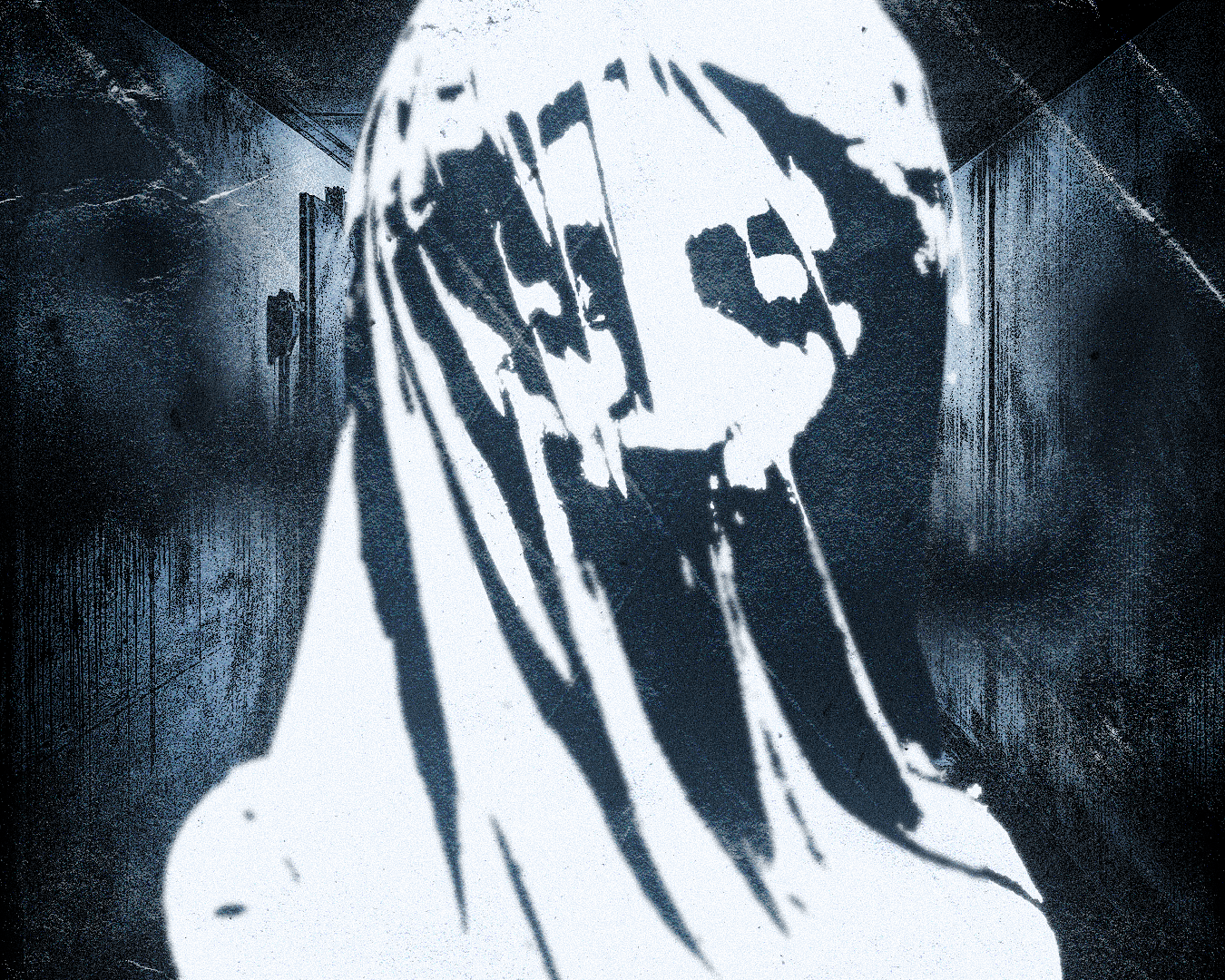
Creaky floorboards croaking beneath invisible weight, drawers and cupboards randomly opening in the night, the flicker of a shadow in the depths of the dark. Whether demons, ghosts or spirits, the paranormal has been recorded for centuries across films, stories and cultural legends.
While there can be scientific explanations for one’s encounter with a ghost, science cannot explain everything, and it’s time to acknowledge that in this vast universe where new discoveries are made every day, even walking spirits are possible. New discoveries in science are constantly being made, both in favor of ghosts and against them, such as matter interacting with the physical world and speculations on where the human consciousness goes after death.
According to the Merriam-Webster dictionary, ghosts are defined as a disembodied soul of a human being that is unable to pass on, usually as a result of intense trauma.
The idea of people who have access to those existing in the spirit world materializes across many cultures. Indigenous Americans have medicine people or spirit-walkers acting as guides or translators, East Asian countries like Korea have shamans who perform rituals and West Africa has mediums who communicate with ancestors. Though they have different names, rituals and beliefs, all seem to agree that the spirit world exists alongside their own.
How is it possible that several cultures existing in different parts of the world all collectively agree on the existence of spirits if each didn’t have their own personal experiences with ghosts, spirits or the like? And how is it that each culture has someone who possesses the ability to access the spiritual realm?
Skeptics who disagree that ghosts exist tend to use science as a way to rationalize their argument – but it’s this exact way of thinking that is preventing them from seeing all the possible ways that ghosts do exist.
Most nonbelievers denounce the existence of the paranormal because they haven’t experienced any activity themselves. While their lack of evidence can debunk the theories, in a way it also proves them. Without firsthand experience, credibility can be questioned, so nonbelievers who haven’t seen ghosts cannot be the definitive source to say they don’t exist.
Their immovable doubts are also the very thing preventing them from seeing the paranormal evidence they potentially encounter. Just as someone’s personal bias may cause them to favor evidence that supports their beliefs, the same goes for someone who closes their mind to evidence that could disprove their beliefs.
Timing also plays a role in experiencing paranormal activity. Visiting a haunted location with the expectation of experiencing paranormal activity at one specific date and one specific time is unrealistic. Many people who claim to have ghosts living in their house don’t experience the signs daily.
Sometimes it happens in random locations at random times of the day, and one cannot expect a spirit to communicate on someone else’s terms. When they want to be heard, they will.
“My late aunt used to take me to her ranch during the summer,” UNLV anthropology student Alani Lee said. “I was just watching a movie when I heard strange noises outside. Scratching and barking and weird stuff that didn’t make sense.”
Checking on the animals on the farm revealed nothing out of the ordinary, but upon returning to the house, she encountered a figure in the distance. Later on, after being instructed to run inside and not open any windows, her aunt told her that strange creatures still roam the land.
“I think there is a science to ghosts, we just haven’t figured it out yet,” Lee said. “I think there are some things not meant to be seen by humans.”
While it may be difficult to understand or accept, skeptics need to open their minds to the possibility that the paranormal exists. There are many things in this world that cannot be explained by science – and probably never will – and the existence of the spirit realm is one of them. It just hasn’t been found yet or realized.

